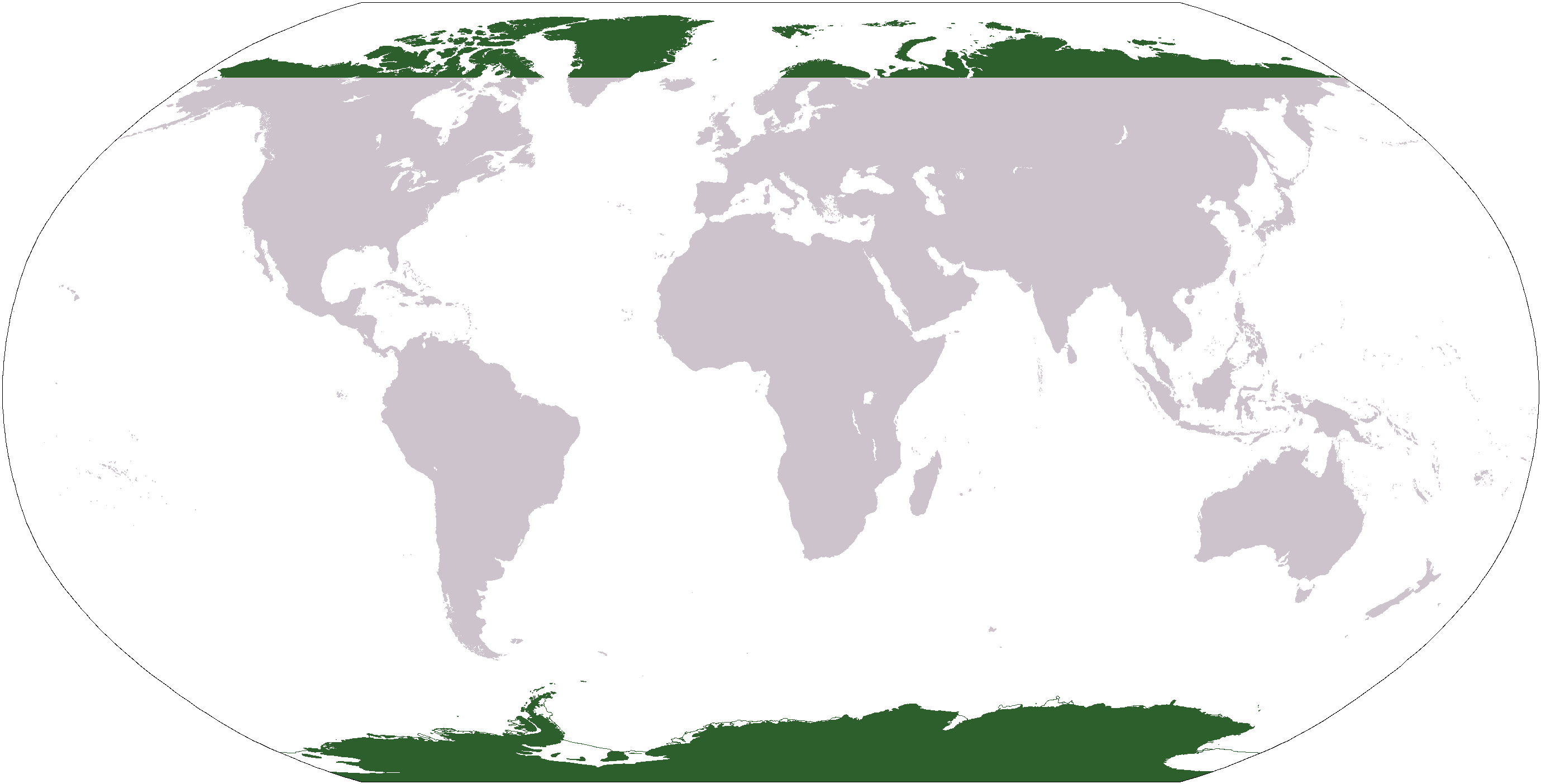
It quite frankly seems more than a little irresponsible to begin any sort of expedition - theoretical or otherwise - without so much as a map to guide you. So here is my very brief introduction to the polar regions, beginning with the Arctic...
 |
| Source: www.commons.wikimedia.org |
The Arctic
About three weeks ago, on the 22nd September, my MSc in Climate Change officially began. A day later, the UN Climate Summit 2014 took place in New York. And while these things were happening, the sun set at the North Pole, to remain below the horizon for six months. I find that an incredible thought.
It can be difficult to define exactly what is meant by 'The Arctic', since different people have alternative ideas regarding exactly where its southern boundary lies. For some, it is the tree line that forms the start of the taiga forest, while for others it is defined by the ten degree isotherm (the line that marks where the average temperature of the warmest month - July - does not reach above 10°C) (Fothergill & Berlowitz, 2011). Here we will define the Arctic as the region north of the Arctic Circle, which circumnavigates the globe at 66°33'44'' N. This is the area where the sun remains above or below the horizon on the summer or winter solstice, respectively. The diagram below shows the different ways in which the Arctic can be defined:
 |
| Map of the Arctic showing the Arctic Circle (dotted blue line), the tree line (green line) and the ten degree isotherm (red line). Source: https://nsidc.org |
Unlike at the South Pole, there is no land mass at the Geographic North Pole, which is located at 90°N in the middle of the Arctic Ocean. Depending on the season, this ocean is covered by a varying amount of pack ice, which can be up to 8 metres thick (Fothergill & Berlowitz, 2011). At its maximum, almost 85% of the ocean is concealed beneath virtually 14 million square kilometres of sea ice (Fothergill & Berlowitz, 2011). The nearest land, the northern tip of Greenland, lies approximately 725 kilometres from the North Pole, but parts of Asia, Europe and North America all extend within the Arctic Circle (Fothergill & Berlowitz, 2011).
That ends my very brief introduction to the Arctic...next we'll take a look at the opposite end of the globe, and learn why - if you're already dreading the cold winter weather - you should probably never consider a trip to the East Antarctic Plateau...